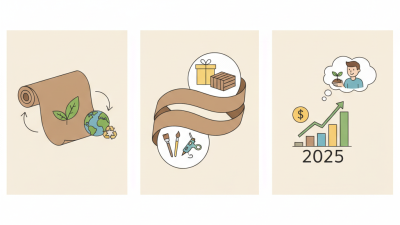

Choosing Food Wrapping Paper for a global supply chain involves more than appearance. Buyers need to consider food-contact suitability, grease resistance, moisture control, heat tolerance, print quality, and ease of handling. A crisp sheet may still disappoint beside a warm pastry or a damp sandwich. Small tests matter.
This guide explores options for bakeries, takeaway counters, delis, and food brands with different service needs. It looks at paper weight, coatings, sheet and roll formats, custom printing, minimum order quantities, and shipping protection. Supplier specifications are useful, but samples reveal details that a product page can miss. Check how the paper folds around a sandwich, absorbs oil beneath fried food, and feels after brief contact with moisture. Results can vary by food and serving conditions.
Global buyers should also request clear product information and confirm that packaging claims match the intended use. Sustainability deserves careful attention, too. Recycled content, fiber sourcing, and compostability are not interchangeable promises; ask for supporting documentation rather than relying on a green label alone. Not every option suits every market or menu. This overview offers practical comparison points, not a universal winner. Some choices remain a judgment call, and that is worth admitting. A reliable purchase usually starts with the food itself, then balances performance, cost, presentation, and supply consistency.

2026 Best Food Wrapping Paper for Global Buyers
Food-wrapping paper should be defined by fiber, grammage, and barrier design, not appearance alone. Fiber affects strength, folding behavior, printability, and end-of-life options. Virgin cellulose often provides clean formation and reliable stiffness. Recycled fiber can support resource efficiency, but its performance may vary by grade and processing. Buyers should request fiber composition, origin details, and food-contact documentation before approval.
Grammage means the paper’s mass per square meter, measured under ISO 536. A higher value does not automatically mean better protection. Lightweight paper may suit dry bakery items, while heavier paper can resist tearing around oily or irregular foods. Measure samples, not assumptions. Check caliper, tensile strength, and fold cracking during realistic packing trials. Small wrinkles can become leaks.
Barrier design should match the food and storage period. Grease resistance, moisture control, oxygen protection, and heat sealing require different structures. A coating may improve oil resistance, while a laminated layer can add moisture protection. Yet extra layers may affect recyclability, stiffness, and converting speed. This is where specifications become imperfect. Test the actual wrap with warm, chilled, wet, and greasy foods. Review migration reports and destination-market requirements with qualified experts. A neat laboratory result can still fail on a busy packing line.
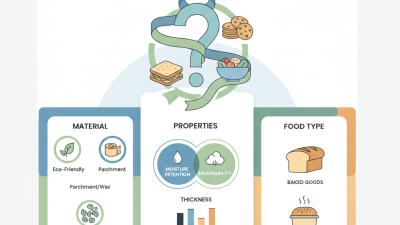
Food wrapping paper should match the product, not only the package design. Kraft paper suits dry bread, pastries, sandwiches, and takeaway items with limited oil. Its natural surface supports folding and printing. However, plain kraft can soften when exposed to sauces or warm fats. It is not a universal choice.
Greaseproof paper works better for fried snacks, butter-rich pastries, and oily bakery products. It helps reduce visible stains and keeps the outer wrap cleaner. Waxed paper adds moisture resistance for chilled foods, confectionery, and products needing easy release. It may become unsuitable near high heat, depending on its wax formulation. Coated paper offers stronger resistance to grease, water, or both. It can support foods with sauces, but the coating must suit the contact temperature and storage conditions. Check technical data carefully.
Small details matter. Test the paper with the actual food, filling, temperature, and holding time. A sheet that performs well with a dry sandwich may fail with a hot, salted filling. Ask suppliers for basis weight, grease resistance, coating details, odor information, and food-contact documentation. Requirements differ across markets, so regional verification remains necessary. Do not rely on attractive samples alone. During trials, inspect folding, tearing, sticking, leakage, and print transfer. Paper selection is rarely perfect. A heavier grade may improve strength but increase material use and packaging cost. That trade-off deserves honest review before large-volume purchasing.
When comparing food wrapping papers, TAPPI T 559 kit ratings offer a practical way to assess grease resistance. The test exposes paper to graded mixtures and records the highest-numbered mixture it resists without visible penetration. In general, a rating closer to 12 indicates stronger resistance than a rating closer to 1. Small differences matter. A paper rated 8 may suit a buttery pastry, while a greasy, warm filling could call for a higher rating. Picture a paper corner held against a freshly fried snack: oil spreading through the fibers is easy to spot, but this simple check does not replace standardized testing.
Tips: Request recent test data and confirm the tested paper grade matches the one you plan to buy. Compare samples under consistent conditions. Kit results help narrow options, not predict every real-world outcome. Heat, contact time, food moisture, folding, and coating can all affect performance. A strong rating alone does not guarantee a clean wrapper after a long delivery. I would also check whether the paper remains easy to fold and comfortable to handle; sometimes “more resistant” is not automatically better for every use. Buyers should record the intended food, serving temperature, and expected contact time alongside each rating. That small note can make supplier comparisons more reliable.
For global buyers, food wrapping paper must do more than look clean and feel sturdy. It must suit the food, contact conditions, and destination market. In the United States, FDA 21 CFR 176.170 addresses components of paper and paperboard intended for contact with aqueous and fatty foods, subject to specific conditions. In the European Union, Regulation (EC) No 1935/2004 sets general requirements for materials that contact food, including that they must not transfer substances in harmful amounts or unacceptably alter food.
Ask suppliers for documentation tied to the exact paper grade, coating, ink, and intended use. Check whether evidence covers direct contact, food type, temperature, and contact duration. A sheet used around a warm, oily pastry may need different assessment from paper used for dry bread. Small details matter. Confirm that test reports and declarations match the product being shipped, not just a similar sample. Requirements can depend on composition and use, so a generic “food safe” statement is not enough. A tidy certificate can still leave questions. Review its scope, date, and supporting test conditions, and seek qualified regulatory advice when markets or applications are unclear.
| 2026 Best Food Wrapping Paper for Global Buyers - Verify Food-Contact Compliance: FDA 21 CFR 176.170 and EU 1935/2004 | |||||
|---|---|---|---|---|---|
| Paper type | Suitable applications | Typical functional properties | Food-contact compliance checks | Buyer verification documents | Important limitation |
| Grease-resistant paper | Burgers, pastries, sandwiches, and other short-term wraps for fatty foods. | Designed to resist grease penetration; performance varies by furnish, treatment, and paper weight. | Confirm the paper and any grease-resistant treatment are suitable for the intended food type, contact time, and temperature under applicable rules. | Food-contact declaration; composition or treatment information; applicable migration or extraction test reports. | “Grease-resistant” describes a functional property; it does not by itself establish food-contact compliance. |
| Baking parchment | Baking, lining trays, and separating baked goods or other foods where the product specification permits. | Often treated to provide non-stick and grease-resistant properties; heat suitability is product-specific. | Verify the declared maximum time and temperature, food types, and whether direct food contact is covered. | Food-contact declaration; technical data sheet; test evidence covering the intended use conditions. | Do not assume every parchment grade is suitable for every oven, grill, or food-contact condition. |
| Uncoated kraft paper | Dry foods, outer wraps, bags, and uses where limited moisture or grease resistance is acceptable. | Paper-based structure with no intentional barrier coating; strength and absorbency depend on grade and construction. | Check suitability for the specific food and contact conditions; recycled content, inks, and processing aids may require additional assessment. | Material specification; food-contact declaration; information on recycled content, inks, and other relevant components. | Uncoated paper may absorb moisture or oil and is not automatically appropriate for direct contact with wet or fatty foods. |
| Wax-coated paper | Certain cold or room-temperature wraps, such as some sandwich or confectionery applications, when the product is specified for that use. | Wax layer can improve resistance to moisture and grease; barrier performance depends on wax type and coating weight. | Identify the wax and confirm its authorization and conditions of use in each destination market; check heat limitations. | Full coating composition or compliance statement; intended-use declaration; relevant test reports. | Wax-coated paper should not be assumed suitable for hot-food or oven use unless explicitly supported by its specification. |
| Polymer-coated paper | Food wraps and packaging requiring a moisture or grease barrier, subject to the coating’s intended-use specification. | Coating can improve barrier performance; final properties depend on polymer, coating weight, seams, and converting. | Assess the complete finished article, including coating and additives, for the target food, time, and temperature conditions. | Declaration covering all layers; composition details; applicable migration testing and technical specification. | A paper substrate’s compliance statement alone does not establish compliance of the coated finished product. |
| Silicone-coated release paper | Food separation, release, or baking applications only where the finished paper is expressly specified for food contact. | Silicone treatment provides release properties; paper base and coating determine strength and heat performance. | Verify that the silicone system and finished article are covered for the intended contact conditions and destination market. | Finished-product food-contact declaration; coating details; test reports for the declared use conditions. | Release-paper performance or heat resistance alone is not evidence of food-contact compliance. |
| Paper–aluminium laminate | Applications needing a stronger light, moisture, or gas barrier, depending on laminate design and seal integrity. | Barrier comes from the laminate structure; adhesives, coatings, and converting can affect finished-pack performance. | Evaluate every food-contact layer and the complete construction; establish which layer contacts food and whether migration or transfer is possible. | Layer-by-layer material declaration; adhesive and coating information; finished-article assessment and relevant test reports. | The presence of aluminium does not exempt the paper, adhesive, coating, or other layers from assessment. |
| Regulatory note: FDA 21 CFR 176.170 addresses components of paper and paperboard intended for contact with aqueous and fatty foods, subject to the regulation’s conditions and limitations. EU Regulation (EC) No 1935/2004 is a framework regulation requiring food-contact materials not to transfer constituents in amounts that could endanger health, cause an unacceptable change in food composition, or impair organoleptic characteristics; it does not provide a single, fully harmonized EU-specific measure for all paper and board. Check applicable national requirements and good manufacturing practice rules, including Regulation (EC) No 2023/2006. Compliance must be verified for the complete finished article and its actual food, time, and temperature conditions; this table is a buying guide, not a certification. | |||||
When reviewing food wrapping paper, start with the supplier’s FSC Chain of Custody certificate. Check the certificate number, legal entity, product scope, and validity date. The scope should cover paper conversion, not only raw material trading. Ask for a transaction document linking the certified pulp, paper rolls, and finished sheets. Without this link, the FSC claim may look stronger than the actual supply trail.
Product test reports should match the exact paper grade and production batch. Request food-contact migration results, grease resistance, wet strength, odor, and ink safety data. Reports should identify the laboratory, test methods, sample description, and testing date. A generic report from another product is weak evidence. Packaging performance also matters. Test a wrapped sandwich after refrigeration, heating, and transport. Small oil spots can reveal coating problems.
In supplier audits, buyers often focus too heavily on certificates. I have seen clean documents paired with unclear batch records. That is a warning. Ask how the supplier separates certified and non-certified stock during storage. Review pallet labels, production logs, and shipment records. FSC certification supports material traceability, but it does not replace food-contact testing. Requirements also differ across markets, so one report may not satisfy every destination. No review is perfect. Leave room for repeat testing when paper, coatings, or suppliers change.