China Best Printing Paper Types for Quality and Performance?
In today's competitive printing industry, the quality of printing paper plays a crucial role. Experts indicate that not all printing papers are created equal. According to a report by Smithers Pira, the global market for printing paper is projected to reach $260 billion by 2025. This highlights the importance of selecting the best types for quality and performance.
Dr. Lisa Chen, an industry expert, points out, “The choice of printing paper can significantly affect the final product’s look and feel.” This statement emphasizes the necessity for businesses to invest in high-grade materials. With numerous options available, the selection process can be overwhelming. This leads to reflections on the balance between cost and performance.
Investors and companies often overlook this aspect, focusing instead on price reductions. The reality is that inferior quality paper can ruin a perfect design. It’s essential to understand that the best printing papers enhance printability and durability, ensuring vibrant results. While exploring options, keep in mind the environmental impact and sustainability of these choices. Finding the right printing paper is not just about functionality; it's also about ethics in production.
Overview of Printing Paper Types Available in China
When exploring the types of printing paper available in China, several categories stand out. Each paper type serves different needs in printing quality and performance. For instance, coated paper offers a smooth finish, enhancing color vibrancy. It is popular for brochures and magazines. Uncoated paper, on the other hand, provides a more textured feel, making it suitable for stationery and letterhead.
Additionally, recycled paper and specialty papers are gaining traction. Recycled options appeal to environmentally conscious consumers. They maintain good print quality while reducing waste. Specialty papers, like those used for photographs or art prints, can provide unique finishes and textures. However, these specialty papers can sometimes be more challenging to source. The wide range of options allows customers to choose according to their specific requirements.
It’s important to consider the printing method when selecting paper. Not all paper types work well with every printer. Some may absorb ink differently, affecting overall quality. A thorough understanding of these factors can enhance final results. Test prints are a practical way to evaluate how different paper types perform in real-world scenarios.
China Best Printing Paper Types for Quality and Performance
Factors Influencing Quality in Printing Paper Selection
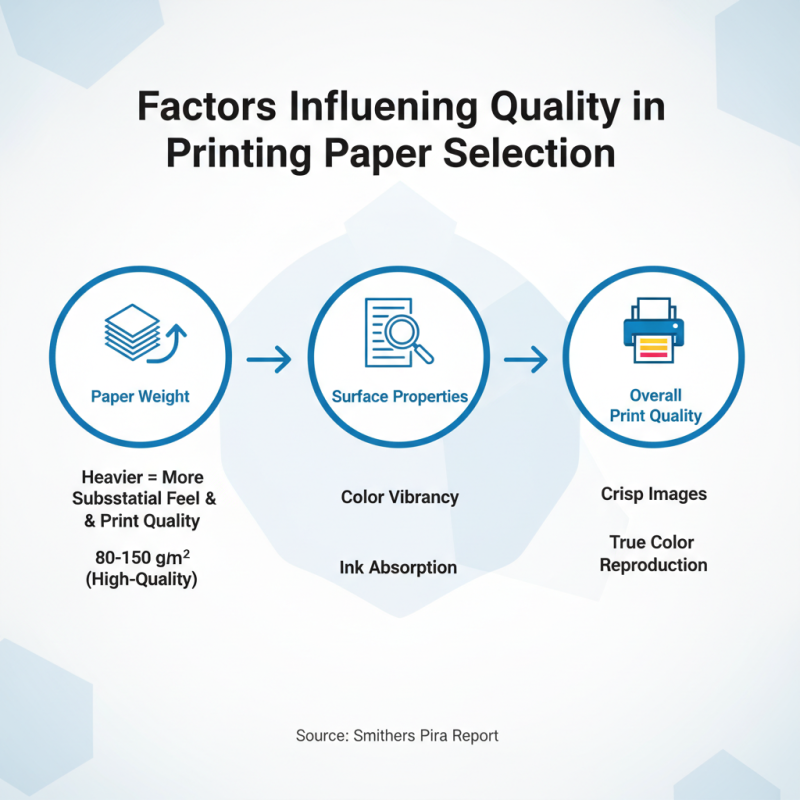
When selecting printing paper, several factors significantly influence its quality. The paper's weight is crucial. Heavier paper tends to feel more substantial and provide better print quality. A report from Smithers Pira indicates that paperweight impacts color vibrancy and ink absorption. Typically, paper weights between 80-150 g/m² are considered high-quality for most printing needs.
Another essential factor is brightness. Brightness levels affect how colors appear on printed materials. Studies show that brighter papers enhance the appearance of images and text. For example, a variety rated at 90 ISO brightness can create a more professional look than a 70 ISO counterpart.
**Tips:** Always check the brightness rating of the paper before purchasing. Consider using uncoated paper for better ink absorption and print quality.
Texture is also significant. Smooth papers are ideal for detailed images, while textured surfaces can add a unique feel to printed works. Notably, some users still overlook their choice of finish, which can impact both aesthetics and functionality. Inconsistency in paper selection might lead to unsatisfactory results, making it essential to reflect on one’s choices. Balancing these factors is key to achieving high-quality print products.
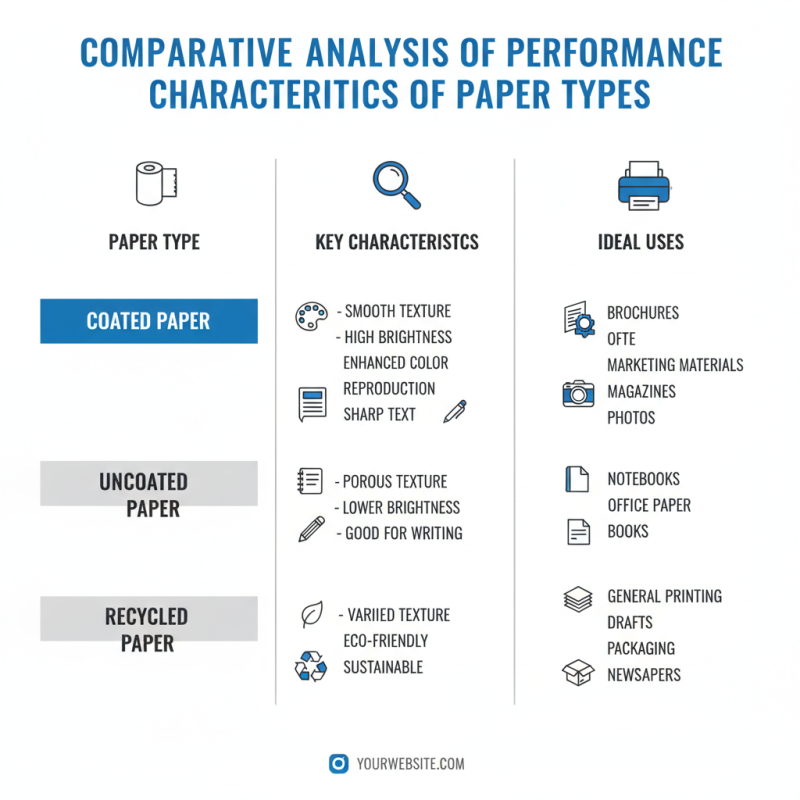
Comparative Analysis of Performance Characteristics of Paper Types
When selecting printing paper types, understanding their performance characteristics is crucial. Recent industry reports show that paper types can vary significantly in weight, texture, and brightness. For instance, coated paper typically delivers vivid color reproduction. It can enhance the appearance of high-resolution images and sharp text, making it ideal for brochures and marketing materials.
Uncoated paper, on the other hand, is often preferred for its tactile quality. However, it can absorb ink differently. This can lead to variations in color intensity and sharpness. A 2022 study indicated that 60% of designers find uncoated options suitable for everyday use. Yet, users report challenges with ink bleed in large prints.
There are performance trade-offs with each paper type. While glossy papers reflect light beautifully, they can show fingerprints easily. In contrast, matte options minimize glare, enhancing readability. Nevertheless, a report noted that nearly 30% of users feel matte papers can underperform in color vibrancy, leading to less satisfaction. Understanding these nuances is essential for making informed choices.
Environmental Considerations in Choosing Printing Paper
Choosing the right printing paper involves more than just aesthetics. Environmental considerations play a crucial role. Selecting paper made from sustainable sources can significantly reduce your carbon footprint. Recycled paper options are widely available and often perform well under various printing conditions. This aligns with the growing awareness of corporate responsibility.
Tips: Look for certifications like FSC or SFI. They indicate responsible forest management. Always check the percentage of recycled content in paper products.
When looking at quality, consider how the paper impacts the environment. For example, bright white papers often undergo chemical treatments that can be harmful. Opting for unbleached or minimally processed options may be better for the planet, even if they don’t offer the same brightness. It’s a balance between quality and sustainability.
Tips: Test out different types of paper before committing. Understand how different finishes affect print quality and environmental impact. Engage with suppliers who prioritize eco-friendly practices.
Innovations in Printing Paper Technology in China
The landscape of printing paper technology in China has witnessed remarkable advancements. Innovations focus on sustainability and performance enhancement. Manufacturers are prioritizing eco-friendly materials to meet global standards. This shift not only benefits the environment but also appeals to consumers seeking quality and responsibility.
Techniques like digital printing processes have evolved. They allow for sharper images and vibrant colors. These methods reduce waste and enhance efficiency. However, issues remain, such as balancing cost and quality. Not all innovations yield the expected results, highlighting the need for testing and feedback.
Tips: Always check the specifications. Look for papers that offer versatile solutions for different printing methods. Experiment with samples to find the right fit for your needs. Adjusting your choices based on real-world applications will enhance your printed materials significantly.